
Why Hearing Aids?
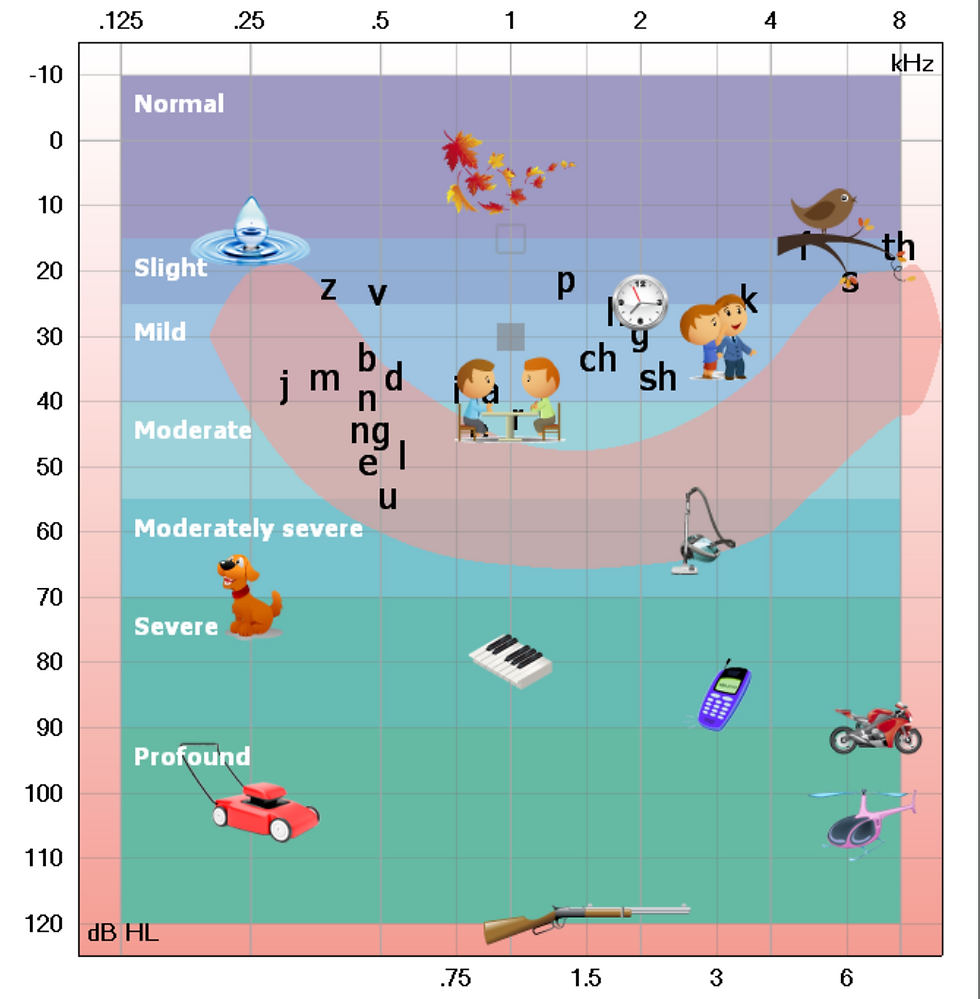
If your child is diagnosed with hearing loss, getting pediatric hearing aids is a critical, positive step for language acquisition and cognitive development. This chart shows the frequency of various sounds at different levels of hearing loss.
At early ages, a child’s brain is in a peak window of auditory neurodevelopment, making consistent sound access vital. It is completely normal for parents to feel a sense of grief or anxiety about the future while simultaneously having to make high-stakes, rapid decisions about devices and therapies.
Hearing aids provide sound access, but learning to interpret that sound requires guided practice. If you currently reside within the US, connect immediately with the state's Part C Early Intervention program for speech and Listening and Spoken Language (LSL) therapy.
A Primer on Hearing Aids
A hearing loss diagnosis can leave parents with a lot to learn. Understanding how pediatric hearing aids work, how to care for them, and how to build a daily routine can make the process feel more manageable.
The Hardware: Pediatric Hearing Aids:
-
Behind-the-ear (BTE) hearing aids: BTE aids are commonly used for young children because they are durable, adjustable, and work with soft earmolds.
-
Earmolds need regular replacement: Children's ears grow quickly, so earmolds often need to be replaced every 3–6 months.
-
Child-safe features: Pediatric hearing aids may include tamper-resistant battery doors and controls that can be locked to prevent accidental changes.
-
Watch for whistling: Frequent whistling, or feedback, can mean the earmold is not fitting properly or your child has outgrown it. Contact your audiologist if it continues.
Keeping Hearing Aids On and Safe:
Young children may pull their hearing aids out or lose them. Retention clips, soft headbands, and other retention options can help keep them secure.
-
Store them safely: Keep hearing aids in a dry, secure case when they are not being worn.
-
Protect them from pets: Dogs and cats can chew or damage hearing aids, so keep devices out of reach.
-
Check your warranty: Ask whether your hearing aids are covered for loss or accidental damage.
Building a Daily Routine:
Consistent access to sound is important for listening and language development. Many pediatric hearing programs recommend an “eyes open, aids on” routine whenever your child is awake.
Keep a small hearing-aid care kit with:
-
Listening stethoscope: Helps parents check sound quality.
-
Spare batteries or charger: Prevents interruptions when power runs out.
-
Air blower: Helps remove moisture from earmold tubing.
-
Wax brush or cleaning tools: Helps prevent wax from blocking the ear-mold.
Your Child's Support Team:
You don't have to figure everything out on your own.
-
Pediatric audiologist: Helps select, program, maintain, and troubleshoot hearing aids.
-
Speech-language pathologist and early-intervention specialists: Support your child's listening, communication, and language development.
-
Early intervention: In the U.S., families can contact their state's Part C Early Intervention program to learn about available services.
-
Remote microphones: These devices can send a parent's or teacher's voice directly to the child's hearing aids, which can be especially helpful in noisy environments.
-
Other families: Parent organizations and deaf/hard-of-hearing family networks can provide practical advice and support from people with firsthand experience.
Remember
You don't need to learn everything at once. Start with consistent hearing-aid use, basic care, and regular communication with your child's audiologist and support team.
Local Resources
-
If your child is above the age of 2, and you find out that they have hearing loss, make sure you contact the Arizona School of the Blind and Dead (ASDB) and/or the Division of Developmental Disabilities (DDD)
-
You should apply to Early Intervention Programs in your state (AZEIP in Arizona)
-
Doing this gives you access to various resources that could help your child when they start school
-
-
By the time your child is age 3, they must have shifted responsibility of their hearing loss disability to their local school district.
-
In Arizona that's mostly the PV Schools District
-
-
Process of transitioning should start when they are 2.5 years old
-
If you cannot afford hearing aids for your child (~$2000) for each aid, look at the HEAR for Kids program, which provides loaner hearing aids to children of ages 0-18.
-
If you want peer support from parents who have gone through the same thing you are going through right now, contact Arizona Hands and Voices, who will match you with an experienced parent mentor who can console you and advise you.

